
Reference
Models, knowledge, and vector databases
Understand models, embeddings, documents, and searchable knowledge in Pūnaha.
What these concepts mean
A model performs an enabled AI task. Response generation creates text. An embedding model turns text into numeric values that can be compared by meaning.
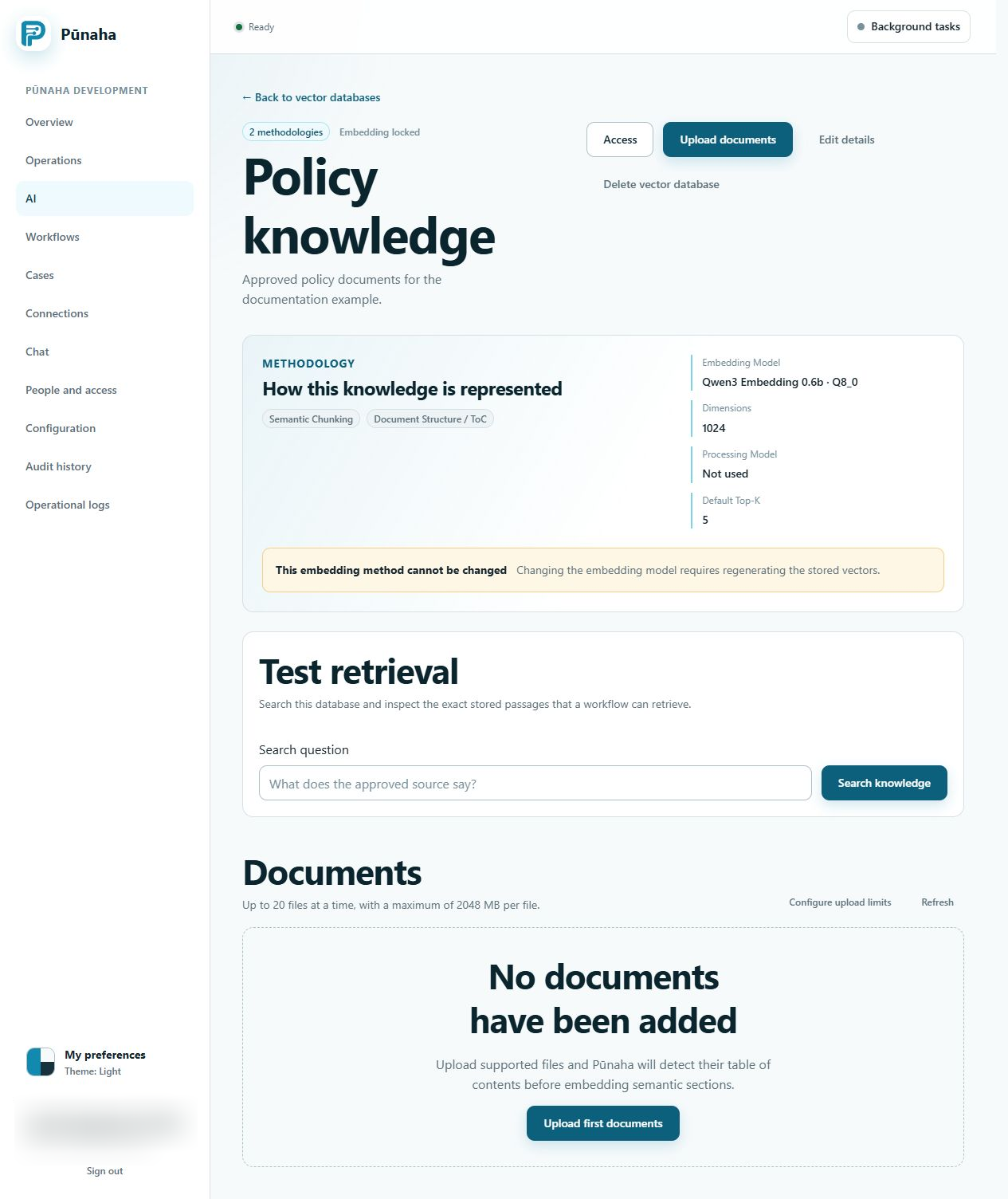
A knowledge database holds processed documents and searchable passages. Access and API pages may call the same resource a vector database.
Why they matter
The embedding model used to store a passage must match the way the database searches it. Changing that choice requires the stored vectors to be created again.
A search result returns stored passages. A workflow or person must still check whether a passage supports the answer they need.
How they work together
- An administrator prepares and enables an embedding model.
- A knowledge owner creates a database with that model.
- Pūnaha reads an uploaded document.
- It splits the readable text into passages.
- The embedding model represents each passage.
- A search compares the question with the stored passages.
Who manages them
AI administrators manage model Connections, models, deployments, and the local runtime. Knowledge owners manage knowledge databases and documents. Access administrators control each allowed item and action.
Related tasks
Return to the glossary.
Was this page helpful?
Your answer helps us improve the documentation.
Do not include personal information, customer information, passwords, or keys.