
Reference
Workflows, versions, and runs
Understand the workflow draft, published versions, and individual runs.
What these concepts mean
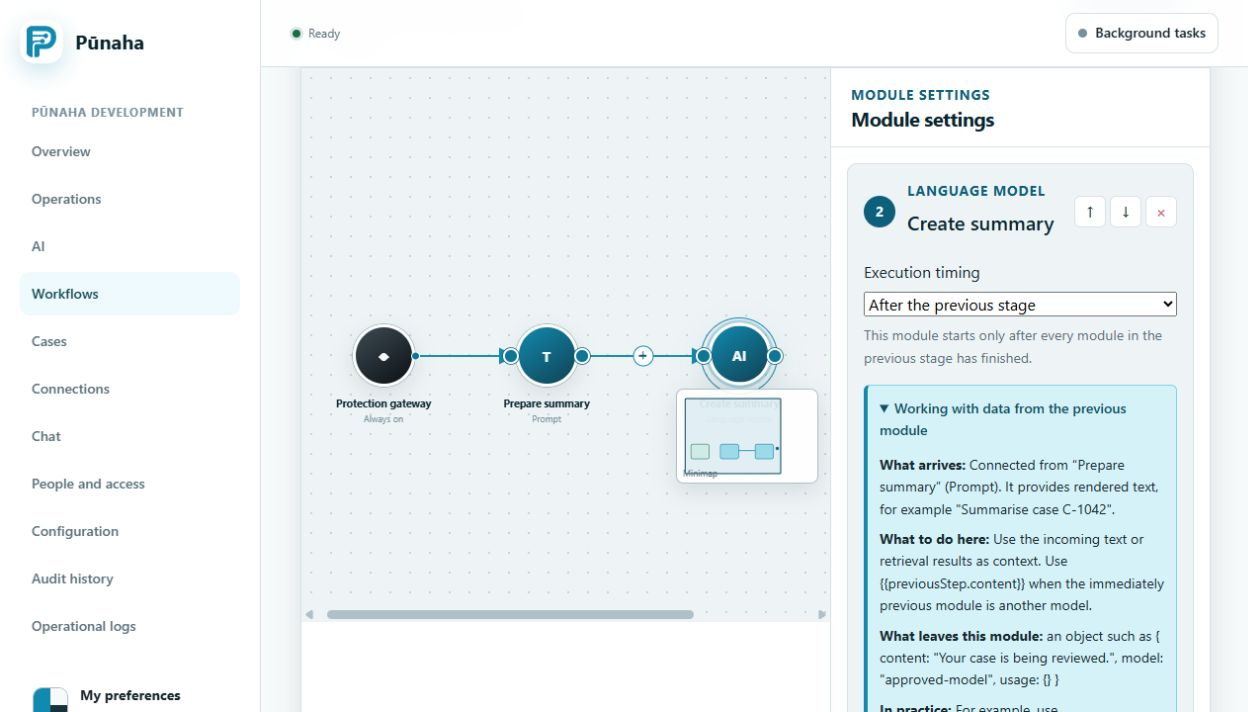
A workflow is a connected set of steps. It receives information, performs work, and returns a result.
The draft is the editable copy. Publishing creates a numbered workflow version. A run is one use of a workflow version.
Why they matter
A published version keeps the behaviour used by a run. Editing the next draft does not change that older version.
The run keeps its version, state, events, approvals, and results so the work can be reviewed.
How they work together
- A builder creates or changes the draft.
- Pūnaha checks the draft.
- The builder tests it with safe sample information.
- Publishing creates a numbered version.
- A person or service starts a run from an allowed version.
- Pūnaha records the run as each step completes or fails.
Who manages them
Solution builders create and test drafts. A person with Publish access creates a version. A person or service with Run access starts a run.
Operators investigate waiting or failed work without changing the workflow design.
Related tasks
- Build, publish, and run a workflow.
- Choose workflow steps.
- Find and run workflows.
- Investigate a failed run.
Return to the glossary.
Was this page helpful?
Your answer helps us improve the documentation.
Do not include personal information, customer information, passwords, or keys.